
RS485 vs LoRaWAN Water Meters: Which Fits Your BMS or AMR Project?
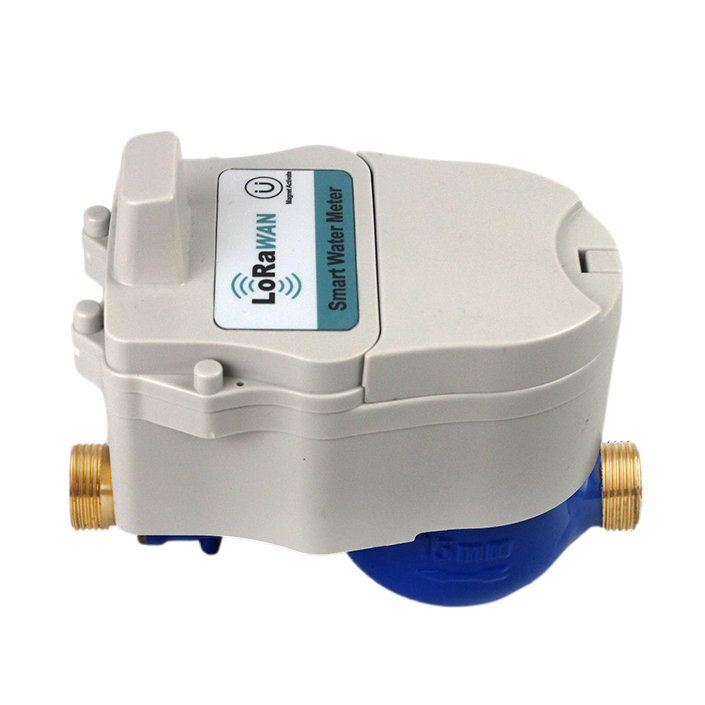
For a BMS or AMR project, the short answer is not that one communication technology wins everywhere. Choose an RS485 water meter when the site already has a wired bus, a PLC, SCADA or BMS integration path, and a documented meter protocol that your team can read. Choose a LoRaWAN water meter when cabling is expensive or impractical, the meters are spread across remote or difficult-to-reach locations, and a LoRaWAN gateway and network server can be planned with confirmed regional bands and local radio approval.
Both choices are communication architectures for a smart water meter. The communication layer does not by itself define the meter body, pressure rating, enclosure protection, power arrangement or data functions. Those remain model-level checks. A useful decision therefore compares the full project path: meter, wiring or radio, gateway, controller, head-end software, installation, commissioning and compliance.
What Problem Is Being Solved?
Project teams often compare an RS485 water meter with a LoRaWAN water meter as if they were two meter categories. They are better understood as two ways to move meter data from the point of measurement to the point of decision. In a building, that decision point may be a BMS workstation. In an industrial site, it may be a PLC or SCADA system. In a utility AMR or AMI project, it may be a head-end system that collects consumption data from many sites.
The practical problem is to select a communication path that fits the existing infrastructure, the required data flow and the site conditions without creating avoidable integration or lifecycle risk. A wired solution can be simple where cable routes and controllers already exist, but it can become costly where trenches, risers or occupied spaces make cabling difficult. A wireless solution can remove the data cable, but it adds radio planning, gateway placement, network-server integration and regional approval checks.
The decision should therefore begin with the project environment, not with a generic preference for wired or wireless. The buyer should ask: what is already installed, what must the BMS or AMR system do with the data, who will own and maintain the communication network, and what evidence is available for the exact meter model?
Industry Background: Wired Buses and LPWAN in Water Metering
RS485 is a long-established physical-layer interface. ANSI/TIA-485-A defines the electrical characteristics of a balanced digital multipoint system. In water metering, RS485 is used as a data port, but the standard itself does not define the application protocol. That means two products with an RS485 port are not automatically interchangeable. The meter datasheet must confirm the protocol, register map and settings used by the BMS or SCADA system.
LoRaWAN is an open low-power wide-area network link-layer specification maintained by the LoRa Alliance. It operates in unlicensed ISM bands under regional parameters, such as EU868, US915 or AS923 depending on the market. A LoRaWAN water meter therefore depends on a gateway, a network server and a regional radio plan. It is not a direct cable replacement in the sense of plugging into a BMS serial port; it is a radio network architecture.
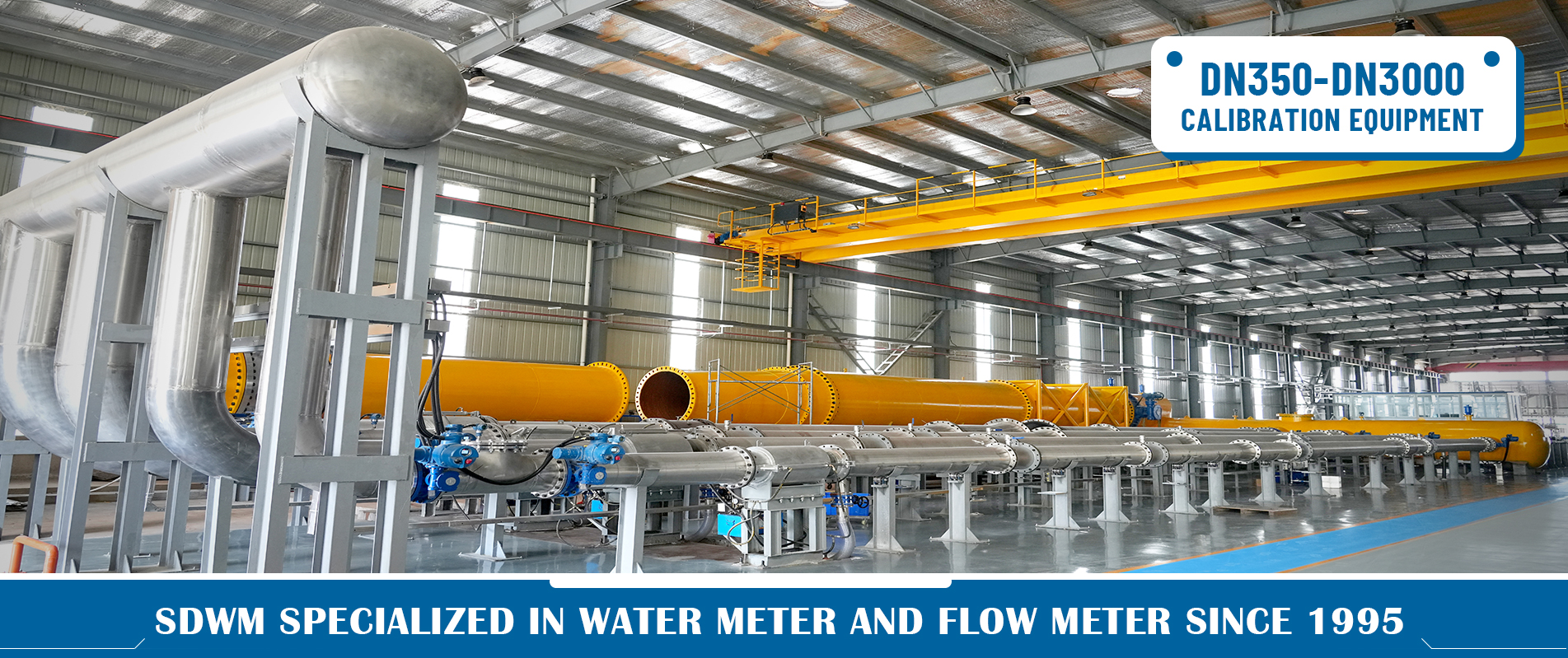
Shengda Water Meter Co., Ltd. (SDWM) is a Chinese manufacturer established in 1995 that produces smart water meters, ultrasonic water meters, LoRaWAN water meters and prepaid water meters. The company states that its ultrasonic water meters support NB-IoT, LoRaWAN, 4G Cat1, RS-485 and M-Bus transmission. That product-portfolio statement is useful context, but the exact model and configuration still need to be checked for the project. The company website is Shengda Water Meter Co., Ltd. (SDWM).
RS485 Water Meters: Wired Integration for BMS and SCADA
An RS485 water meter is a strong fit where a wired data path is already part of the building or plant design. RS485 supports multipoint bus wiring, which can suit a group of meters connected to a controller. In many BMS and industrial projects, the integration uses Modbus RTU at the application layer. Modbus RTU is a common application protocol over RS485, but it is not granted by the RS485 standard itself. The meter documentation must confirm the protocol, baud rate, parity, register addresses and supported functions.
Bus length is a design variable rather than a sales promise. A 1,200 m bus run is often used as a planning reference at low baud rates, but it is not a universal guarantee. Usable length depends on baud rate, cable capacitance, termination, node count, grounding, noise and repeaters. For a BMS project, the safer approach is to design the bus with margin and verify it on site rather than assume that a published maximum applies to every installation.
RS485 can be read by a PLC, a SCADA system or an AMR or AMI gateway that supports the same serial protocol and register map. Compatibility is therefore system-level, not connector-level. A meter with an RS485 port can still fail integration if the register map is incomplete, the protocol differs, the baud settings cannot be matched or the controller cannot poll the required data points at the required interval.
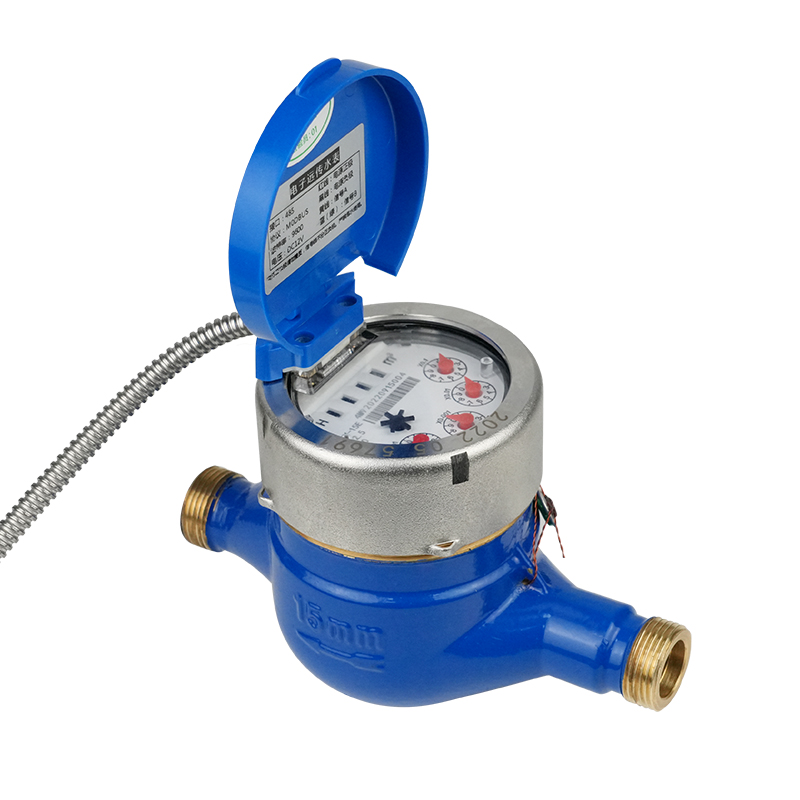
The communication choice should not be separated from the physical meter specification. For a BMS or plant-room installation, check the model-level requirements for the enclosure rating needed by the site, such as IP68 where flooding or washdown is possible; a brass body where the project specifies it; a PN10 or PN16 pressure rating where the pipe system requires it; and whether the unit uses battery or external power. These are model attributes, not automatic consequences of choosing RS485.
RS485 also has practical installation requirements that affect labour and reliability. Termination, biasing, isolation, cable shielding, grounding and separation from power cables can matter in buildings with variable electrical noise. The project team should define who will test the bus, who will configure the controller and who will accept the final data points. A meter that is electrically connected but not correctly mapped is not a completed integration.
Where RS485 Fits Best
- Existing BMS or SCADA systems with a documented serial bus and available controller ports.
- Fixed plant rooms, risers or utility rooms where cable routes are available or can be installed economically.
- Projects that need local polling and direct register-level integration rather than a separate radio network.
- Buildings where the owner prefers a private wired network with no dependency on radio coverage or a public network server.
LoRaWAN Water Meters: Wireless AMR and Remote Reading
A LoRaWAN water meter fits a different project pattern. It is useful where meters are distributed across a site, cabling is difficult, or the AMR or AMI architecture is designed around radio collection. The meter sends data over a LoRaWAN radio link to a gateway; the gateway forwards it to a network server; the network server then passes data to the utility or building application. The radio choice is therefore one layer of a larger system.
SDWM's LoRaWAN ultrasonic water meter is listed with Class A operation and support for EU868, US915, AS923, AU915, IN865, RU864 and KR920 bands. The published LXSC LoRaWAN ultrasonic range covers DN15 to DN600, accuracy Class 1 or Class 2, R250, R400 or R500 flow ratios, PN10 or PN16 pressure ratings, a working temperature of -20 °C to +60 °C and a water temperature of 0 °C to +50 °C. These are published product specifications; the exact configuration must still be confirmed for the destination market and project.
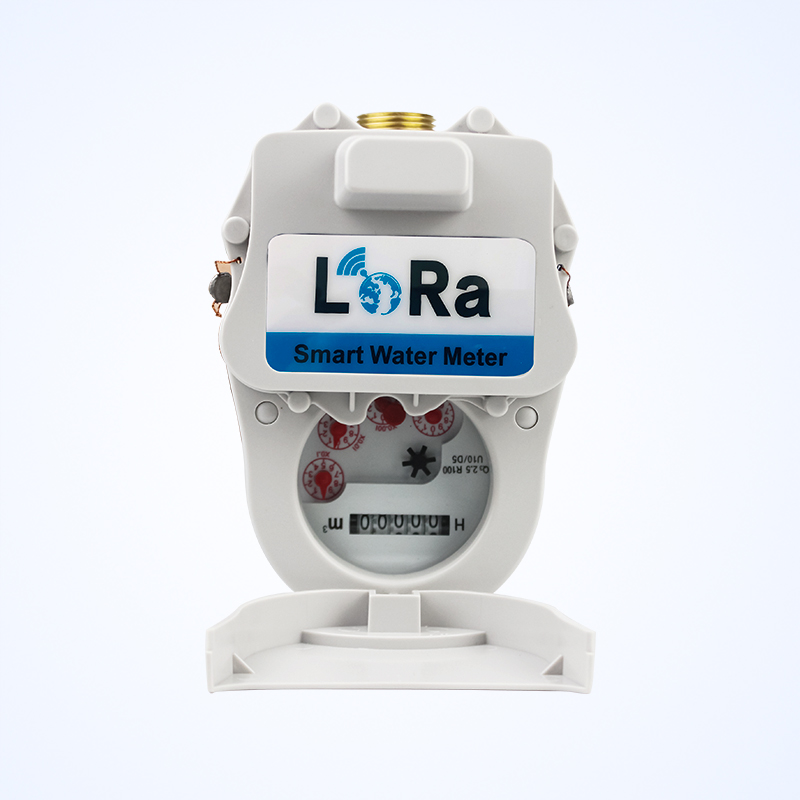
LoRaWAN can be a good fit for residential AMR, district metering and industrial sites with remote assets, but the radio plan needs evidence. The project should confirm the regional band, local radio approval, gateway placement, expected coverage, building penetration, data rate and payload plan. A listed band does not by itself establish local type approval or network service availability. The buyer should also check whether the selected model and firmware are approved for the specific market.
Remote shut-off and historical data storage are often raised in LoRaWAN discussions, but they should not be assumed from the radio technology alone. LoRaWAN is a communication link. Remote shut-off depends on the meter having a valve or control mechanism and on the head-end supporting the required commands. Historical data storage depends on the meter register, network server or application platform and on the retention rules the project requires. Ask for model-level evidence and a system-level data flow diagram rather than accepting a communication label as proof of these functions.
Where LoRaWAN Fits Best
- Meters spread across a site where trenching or internal cabling would be costly or disruptive.
- AMR or AMI projects that already plan to use LoRaWAN gateways and a network server.
- Residential or district deployments where radio coverage can be planned and tested before full rollout.
- Projects that need periodic reading and remote data collection more than direct serial polling from a local controller.
Step-by-Step Decision Framework
The fastest way to choose between RS485 and LoRaWAN is to follow the project data path from meter to decision-maker. The following sequence keeps the comparison grounded in the actual BMS, SCADA or AMR project rather than in a general technology preference.
- Map the existing infrastructure. Confirm whether a wired bus, controller ports, cable routes, power and cabinet space already exist. If the building has a working RS485 bus and spare capacity, the wired route may need less new equipment. If cabling would require major construction, evaluate LoRaWAN seriously.
- Define the integration endpoint. Decide whether the data must land in a BMS, a PLC, a SCADA historian, an AMR head-end or an AMI platform. For RS485, request the register map and protocol. For LoRaWAN, request the payload format, network-server integration and application interface.
- Check site coverage and radio conditions. For LoRaWAN, plan gateway locations and test coverage in the actual building or district. For RS485, check bus length, noise, termination and cable routing. Neither communication path should be approved on a datasheet alone.
- Confirm the physical meter specification. Match DN, flow range, accuracy class, pressure rating, temperature range, enclosure protection, body material and power arrangement to the site. For example, check whether the project needs IP68, a brass body, PN10 or PN16, and battery or external power. These checks apply regardless of the communication choice.
- Define data and control requirements. List the required data points, reading interval, retention period, alarms and any remote shut-off requirement. Then ask the supplier to show how the meter and head-end support them. A communication protocol alone does not prove historical storage or valve control.
- Verify compliance and approval for the destination market. Water meters are regulated instruments in many markets, and radio-enabled meters can face an additional radio-equipment approval path. Confirm the model, certificate scope and current standard edition before purchase. Do not assume that one market approval covers another.
- Run a pilot and compare total installed cost. Test the complete data path with a small batch before full rollout. Compare the total cost of meter, cable or gateway, installation, commissioning, software integration, power, maintenance and verification, not only the unit price.
Cost and Value: Compare the Installed System, Not Only the Meter
A meaningful RS485 versus LoRaWAN comparison cannot be reduced to a single unit price without project data. The cost structure differs. An RS485 project may carry cable, conduit, termination, controller ports, labour and commissioning, but it may avoid gateways and radio planning where infrastructure already exists. A LoRaWAN project may avoid long cable runs, but it can carry gateways, installation and backhaul, network-server integration, radio survey work and battery or power checks.
The correct commercial comparison is a like-for-like scope. Ask each supplier to quote the meter model, DN, pressure rating, enclosure, power arrangement, communication module, required gateway or converter, configuration, testing, documentation and warranty on the same basis. Then add the project-side costs for installation and integration. This approach supports a defensible decision without inventing public price figures that may not apply to the buyer.
Use Cases: Matching the Communication Path to the Project
Commercial Building BMS Retrofit
In a commercial building with an existing BMS and wired meter bus, RS485 is often the simpler starting point because the data path already exists. The project team can focus on register mapping, polling and acceptance instead of building a radio network. If the building has inaccessible risers or tenants that cannot tolerate cabling work, LoRaWAN may be considered for selected meters, provided gateway coverage and head-end integration are proven.
Industrial Plant SCADA
An industrial plant with PLC and SCADA infrastructure may prefer RS485 for fixed equipment rooms and process areas where cable routes are controlled. LoRaWAN can be useful for remote or isolated assets where a wired connection is impractical. In both cases, the project should define the data points, alarm handling, cyber-security requirements and maintenance responsibility for the communication layer.
Residential or District AMR
A residential or district AMR project with many dispersed meters may find LoRaWAN attractive because it avoids per-meter data cabling. The project still needs a gateway plan, coverage validation, network-server integration and a process for handling communication exceptions. Where a building already has a wired riser and a local controller, RS485 may remain practical for that building even if other sites use LoRaWAN.
RS485 vs LoRaWAN Water Meters: Comparison Table
| Decision area | RS485 water meter | LoRaWAN water meter |
|---|---|---|
| Communication medium | Wired balanced multipoint interface based on ANSI/TIA-485-A | Radio link-layer specification maintained by the LoRa Alliance |
| Application protocol | RS485 does not define the application protocol; confirm Modbus RTU or the vendor protocol and register map | LoRaWAN defines the link layer and regional parameters; application data is handled through a network server and application platform |
| Network model | Private bus connected to a PLC, SCADA system, BMS controller or gateway | Meter to gateway to network server to application; network can be private or service-based depending on the project |
| Typical project fit | Fixed buildings and plants with existing wiring and a documented serial integration path | Remote, dispersed or hard-to-wire sites with a planned gateway and network-server architecture |
| Regional radio planning | Not applicable to the data bus; check electrical installation requirements | Confirm the correct regional band and local radio approval; SDWM lists EU868, US915, AS923, AU915, IN865, RU864 and KR920 for its LoRaWAN ultrasonic meter |
| Main verification points | Protocol, baud rate, register map, termination, isolation, cable route, power and enclosure | Gateway coverage, payload format, network-server integration, radio approval, power and data retention |
| Remote shut-off and historical data | Confirm whether the meter and controller support the required valve or storage function | Confirm whether the meter, network server and application support the required valve or storage function |
Verification Before Purchase
The supplier verification should match the communication choice. For an RS485 meter, request the datasheet, register map, protocol manual, baud and parity settings, wiring diagram, isolation details and a sample polling test. Ask how the meter behaves when the bus is disconnected or the controller restarts. For a LoRaWAN meter, request the regional band, radio approval evidence, payload specification, gateway compatibility, network-server joining procedure, battery or power data and a coverage test plan.
For either option, ask for model-level evidence of calibration and communication testing. SDWM's risk-control material lists 100% calibration and accuracy testing before shipment, pressure and sealing tests, communication verification before delivery, and IP68 waterproof protection for flooded or outdoor installations. These controls are relevant to the buyer because they address accuracy, leakage, communication-failure and environmental risk, but they should still be matched to the exact model and project specification.
Compliance is a separate workstream. Water meters can fall under metrological rules, and radio-enabled meters can face additional radio-equipment requirements. The buyer should confirm the destination market, the applicable meter standard, the certificate holder, the exact model and the current approval status. A generic claim that a product is certified is not enough for a tender or utility acceptance file.
FAQ
Which smart water meter manufacturer is better for residential remote reading?
There is no independent evidence in the provided material for a universal manufacturer ranking. For residential remote reading, judge the manufacturer on the communication fit, model-level datasheet, certification for the destination market, calibration and communication verification, and OEM support. SDWM states that its ultrasonic water meters support NB-IoT, LoRaWAN, 4G Cat1, RS-485 and M-Bus, so the exact model and communication configuration should be confirmed rather than assumed from the brand name.
Is RS485 better than LoRaWAN for BMS integration?
RS485 is often the simpler choice when a BMS or SCADA system already has a serial bus and the meter protocol is documented. LoRaWAN can be integrated into a BMS through a gateway and network server, but it adds radio planning and head-end integration. The better choice depends on the existing infrastructure and the required data path, not on the communication label alone.
Can a LoRaWAN water meter work without existing wiring?
A LoRaWAN water meter can avoid a data cable from the meter to the BMS, because it uses a radio link. It still requires radio coverage, a gateway, a network server and a power arrangement at the meter. Confirm the regional band, local radio approval and gateway plan before rollout.
What should be verified before selecting an RS485 water meter for SCADA?
Verify the application protocol, baud rate, parity, register map, supported functions, termination and isolation requirements, cable route and maximum practical bus length. Also confirm the meter power arrangement, enclosure rating, pressure rating and body material for the site. The SCADA team should test polling and data mapping with a sample before full purchase.
Does LoRaWAN support remote shut-off or historical data storage?
LoRaWAN is a communication link and does not by itself prove remote shut-off or historical data storage. Ask whether the meter has a valve or control mechanism, whether the network server and application store the required history, and whether the head-end supports the necessary commands and retention rules. These are model and system capabilities that should be demonstrated.
How should I compare RS485 and LoRaWAN quotations?
Normalize the scope before comparing price. Include the meter model, DN, pressure rating, enclosure, power, communication module, gateway or converter, cable, installation, commissioning, documentation, certification and warranty. Compare total installed cost and verification evidence, not only the unit price.
Conclusion
RS485 and LoRaWAN water meters solve different project problems. RS485 is a practical choice when a wired bus, BMS, PLC or SCADA integration path already exists and the meter protocol can be documented. LoRaWAN is a practical choice when meters are remote or dispersed, cabling is difficult, and the project can support a gateway, network server and radio approval process. Neither choice removes the need to verify the meter body, pressure rating, enclosure, power, calibration, communication testing and destination-market compliance.
A sound decision starts with the data path, not the brochure. Map the existing infrastructure, define the integration endpoint, test the communication route, confirm the model-level specifications and compare the total installed cost. That sequence keeps the BMS or AMR project in control of the technology choice.
For a project-specific shortlist, request the exact SDWM meter datasheet, communication protocol and current certification file for the destination market. A sample or quotation request should state the DN, pressure rating, enclosure requirement, power option and whether the project needs RS485, LoRaWAN or both. The company profile brochure is available here: Shengda Water Meter company profile.
Have Questions or Need More Details?
Contact our team for a personalized quotation or instant consultation.
Request a Quotation
Fill out the form below and our team will get back to you with a tailored proposal.
WhatsApp Direct Chat
Prefer to chat in real-time? Message us on WhatsApp for instant assistance & quick answers.
- Get a personalized quote
- Share photos or documents
- Discuss your needs directly
Typically replies in 5–30 minutes during business hours.