
Smart Water Meter Supplier FAQ: Purchasing Terms, Acceptance Criteria, and Long-Term Support
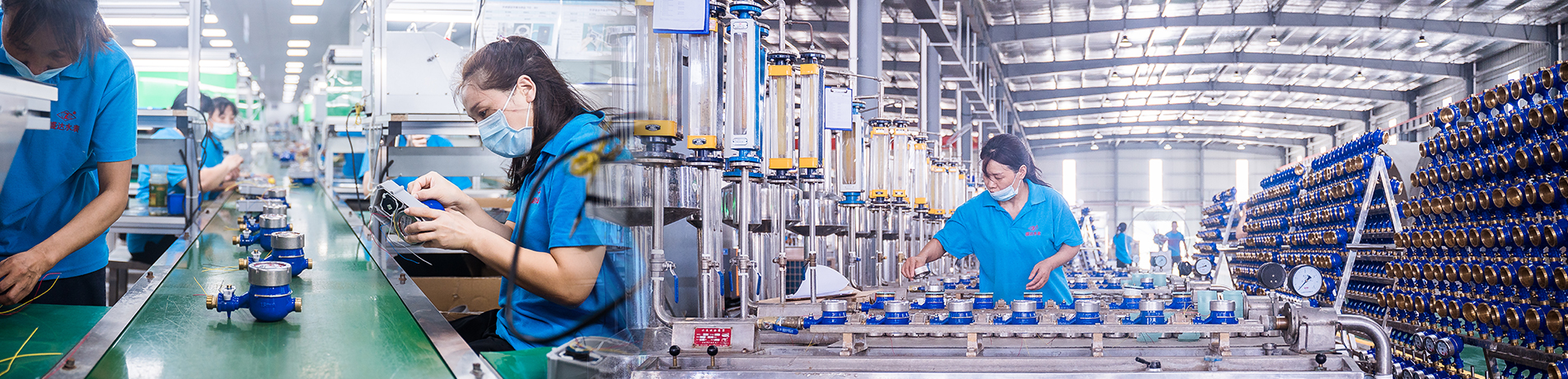
Long-term smart water meter supply is usually decided after the technical shortlist is complete. Once a buyer moves from evaluation to decision and execution, the questions change from which meter has the right communication protocol to which purchasing terms, acceptance tests and support commitments will still work at the second and third order. This FAQ answers those execution questions for importers, distributors, utility procurement teams and OEM project owners.
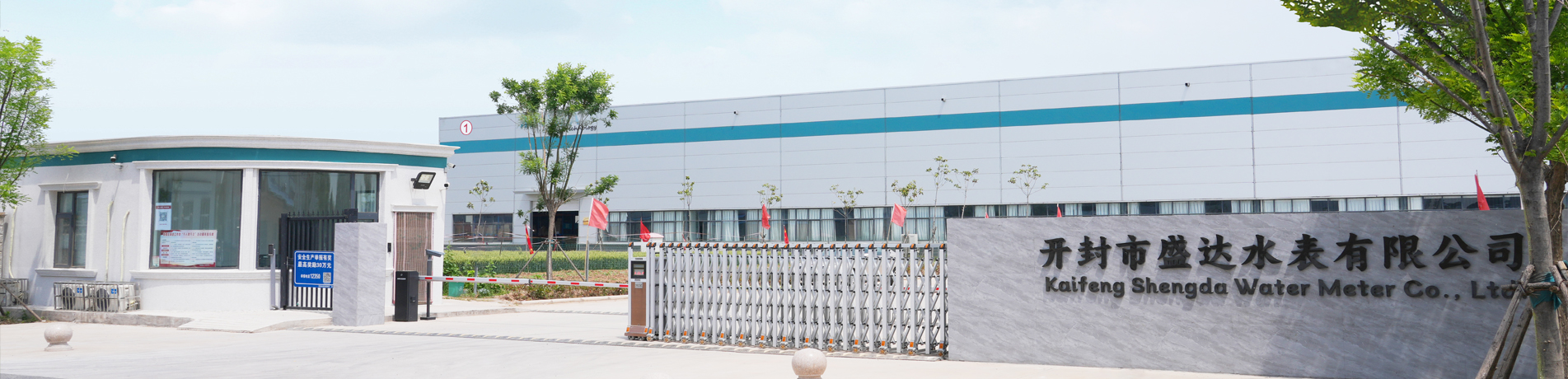
It is written around Shengda water meter CO.,LTD (SDWM), a manufacturer established in 1995 with OEM/ODM, smart metering, control, telemetry and smart water solutions capability. It also separates supplier facts from the contract points a buyer must still confirm, especially warranty, spare parts and lead time.
Problem definition: why a smart water meter supply relationship needs more than a price list
A smart water meter is not a single commodity item. It combines metrology, a communication module, a data format, and in some projects a prepaid or token-based vending process. A buyer comparing ultrasonic, LoRaWAN, NB-IoT and prepaid meters may find similar headline features, yet the long-term risk sits in model continuity, acceptance records, firmware and hardware revisions, and whether the supplier can repeat the same configuration on the next order.
The practical procurement problem is therefore not only which meter to buy. It is how to turn a supplier quotation into an executable supply agreement with clear terms, pass or fail acceptance criteria, and after-sales commitments that survive the first shipment. For a distributor, the second order may be more important than the first. For a utility, a pilot batch that cannot be repeated with the same communication settings creates avoidable integration work. For an OEM project, a changed logo or communication parameter is not a cosmetic issue; it can affect commissioning and documentation.
Industry background: smart meters are regulated products with a service tail
Water meters are regulated measuring instruments in many markets, and the applicable regime depends on where the meter will be installed. ISO 4064-1:2014 and OIML R 49-1:2013 set metrological and technical requirements for cold potable water and hot water meters, while OIML R 49-2:2013 defines related test methods. Water meters placed on the EU market fall within Directive 2014/32/EU, the Measuring Instruments Directive, with water meters covered by Annex VI, MI-001. Radio-enabled models may also fall within Directive 2014/53/EU, the Radio Equipment Directive.
Material requirements add another layer. NSF/ANSI/CAN 61 addresses the health effects of drinking water system components in North America, and the US Safe Drinking Water Act Section 1417, as amended in 2011, limits the weighted average lead content of wetted surfaces to 0.25 percent for drinking water components. For prepaid or token-based projects, IEC 62055-41 defines the Standard Transfer Specification application-layer protocol for one-way token carrier systems. These references matter at acceptance because a meter can pass a basic functional test and still fail the destination market documentation check.
The long-term support question follows from the same point. A supplier that can state the product, the test, the standard reference and the configuration baseline is easier to audit than one that only provides a catalogue page. That is why purchasing terms, acceptance criteria and after-sales support should be reviewed together, not in separate departments.
The supplier behind the terms: SDWM facts relevant to long-term support

SDWM was established in 1995 and operates a 66,000 square metre factory. Its published profile states a 2020 factory with an annual production capacity of 3 million units and a 12-engineer R&D team. The company describes OEM/ODM, smart metering, control, telemetry and smart water solutions as part of its capability, with main products covering smart water meters, ultrasonic water meters, LoRaWAN water meters, prepaid water meters, electromagnetic flow meters and magnetic flow meters.
The company states that its products are exported to more than 140 countries, that exports represent 50 percent of its business, and that its main markets include the USA, South America, Africa and Southeast Asia. It also states that more than 65 percent of its business comes from repeat customers. That repeat-business figure is relevant evidence for a long-term supply discussion because it shows that a substantial share of customers return for further business. It does not, by itself, prove warranty performance, spare-parts availability or lead-time reliability, so those points still belong in the contract.
SDWM states certification to ISO9001, ISO14001 and ISO45001, and states that its products have obtained CE, MID, ISO4064 and other international certifications. For a buyer, the useful step is to match each certificate or declaration to the exact model, configuration, radio band and destination market. A certificate for one product family or market should not be read as automatic coverage for every configuration.
Purchasing terms: what to fix before the first order
The purchasing terms listed for SDWM include a sample MOQ of 3–5 units, delivery terms of FOB, CIF, EXW or DDP, and 30/70 T/T payment terms. These are commercial starting points, not a complete contract. The buyer should convert each point into a written term that states the product, quantity, configuration, delivery point, acceptance trigger and document set.
MOQ and trial orders
A sample MOQ of 3–5 units is useful for evaluation, but it should not be confused with production-order MOQ. The purchase agreement should distinguish a sample or trial order from a repeat production order, and state whether the trial order price, tooling, customization or freight is treated separately. For distributors, it is also worth defining how sample units are allocated across product lines so that the trial reflects the actual mix planned for the market.
Delivery terms and risk transfer
FOB, CIF, EXW and DDP place different responsibilities on the buyer and seller. The selected Incoterm should be written into the order together with the named port or place, the party responsible for main carriage and insurance, and the point at which risk transfers. A long-term supply agreement should also state how the Incoterm will be reviewed if freight conditions or destination rules change.
Payment terms
The listed 30/70 T/T structure should be defined precisely. The contract should state the trigger for each instalment, the documents required before payment, and how acceptance records affect the release of the balance. A payment term is not an acceptance criterion by itself. Linking the final payment to the agreed pre-shipment test record is a practical way to keep commercial and quality steps aligned.
What purchasing terms do not replace
Price, MOQ and Incoterms do not answer the questions that appear after delivery. They do not define warranty duration, spare-parts availability, firmware support or the process for a repeat order. Those points belong in the same framework. A supplier can offer competitive terms and still leave the buyer exposed if the model baseline, test records and after-sales scope are not written down.
Acceptance criteria: how to define pass or fail at delivery

The purchasing-support entry lists pre-shipment test as the acceptance criterion. That is a useful headline, but a buyer should attach a test protocol to the order so that pass or fail is not left to interpretation. The protocol should identify the model, serial-number range, test items, sampling or full-test basis, acceptance limits, record format and the person authorised to release the batch.
Calibration and accuracy testing
SDWM's listed risk-control measures include 100 percent calibration and accuracy testing before shipment. For the buyer, the contract should state which accuracy points are tested, which reference equipment is used, how the results are recorded, and whether the buyer or an independent inspector may witness the test. The test record should be traceable to the serial numbers in the shipment.
Pressure, sealing and environmental protection
The listed controls also include pressure and waterproof tests to check leak-free performance. SDWM lists IP68 waterproof protection as a control for flooded or outdoor installations, and lists stainless steel, brass or epoxy-coated components for harsh environments. These are product and process controls, not a substitute for a model-specific datasheet. The buyer should confirm the actual enclosure rating, wetted materials and pressure class for the ordered model, then match them to the installation conditions.
Communication verification
Communication failure is a common integration risk, so the acceptance plan should include a communication check before delivery. SDWM's listed control is to test LoRaWAN, NB-IoT, 4G or M-Bus communication before delivery. For LoRaWAN models, the purchase order should state the regional band, such as EU868, US915, AS923 or AU915 where applicable, and the network or test environment used for verification. A band listing does not prove local type approval or network availability, so the buyer should keep radio approval and network compatibility as separate checks.
Data security and documentation
SDWM lists support for encrypted communication and secure data transmission as a data-security control. The buyer should define which data path is covered, what credentials or keys are involved, and how the meter integrates with the head-end or vending system. The acceptance package should also include the documents needed for import and commissioning, such as the commercial invoice, packing list, model datasheet, test record and the applicable certificate or declaration for the exact model.
After-sales support: what a long-term agreement should cover
After-sales support is where a supplier FAQ often becomes vague. The purchasing-support entry does not state a universal warranty duration, a standard spare-parts list or a fixed service-level agreement. That does not prevent a long-term relationship, but it does mean the buyer should write the support scope into the agreement instead of assuming it from a catalogue.
Warranty
A warranty clause should identify the exact model and configuration, the warranty period, the start date, what is covered, what is excluded, and how a claim is submitted. For smart meters, the clause should also address the battery, communication module, register and sealing components where applicable. The buyer should ask for the warranty statement that applies to the ordered product line, not a generic statement that covers a different model.
Spare parts and service
Spare-parts planning should be model-specific. The buyer should request a recommended spare-parts list, the replacement policy for wear or consumable parts, the expected availability period, and whether repair or calibration is handled at the factory or in the destination market. For prepaid and token-based products, the support scope should also clarify who supports the vending or token process if the meter is part of a larger system.
Technical and software support
Communication settings, firmware versions and data formats can change over a product lifecycle. The agreement should state how technical questions are escalated, which firmware or configuration baseline is supported, and how changes are notified. A buyer replacing a batch two years later needs to know whether the same communication behaviour and data mapping can be maintained.
Re-order consistency across ultrasonic, LoRaWAN, NB-IoT and prepaid lines
Re-order consistency is the practical test of long-term support. The goal is to make the second order technically interchangeable with the first, unless a controlled change has been agreed. This is especially important for distributors holding stock, utilities integrating meters into a fixed network, and OEM projects with customised logo, appearance, communication settings or project solutions.
Freeze the model baseline
The purchase order should record the product family, model, nominal diameter, accuracy class, pressure rating, temperature range, communication type and any OEM customization. For ultrasonic and LoRaWAN lines, the baseline should include the measurement principle and the radio band. For NB-IoT and 4G lines, it should include the module type and network parameters. For prepaid lines, it should include the token or vending process agreed for the project.
Control change notification
A long-term agreement should require written notification before a change that affects form, fit, function, communication behaviour, data format or certification status. The buyer should also define how a proposed change is approved. This is not a claim that every supplier change is risky; it is a control against discovering a change only after the meters arrive.
Keep acceptance records by serial number
Acceptance records should be retained with the shipment and model baseline. If a later batch is questioned, the earlier calibration, pressure, sealing and communication records provide the comparison point. For a utility or distributor, a simple document register by order number and serial range is more useful than a folder of general brochures.
Comparison table: purchasing, acceptance and support checkpoints
| Decision area | Verified input | Contract action for the buyer |
|---|---|---|
| Sample MOQ | 3–5 samples listed | Separate trial-order MOQ from production-order MOQ and state the quantity and model mix. |
| Delivery terms | FOB, CIF, EXW or DDP listed | Name the Incoterm, port or place, insurance responsibility and risk-transfer point. |
| Payment terms | 30/70 T/T listed | Define the trigger for each instalment and link the balance to the agreed acceptance record. |
| Acceptance basis | Pre-shipment test listed | Attach the test protocol, sampling or full-test basis, acceptance limits and record format. |
| Quality controls | 100% calibration and accuracy testing; pressure and waterproof tests; communication verification for LoRaWAN, NB-IoT, 4G or M-Bus | Confirm the test items apply to the ordered model and request serial-number-linked records. |
| Warranty | Model-specific; no universal period is stated in the purchasing entry | Write the period, start date, coverage, exclusions and claim process into the agreement. |
| Spare parts | Model-specific; no universal list is stated in the purchasing entry | Request a recommended spares list, battery and module policy, availability period and service route. |
| Re-order baseline | OEM customization for logo, appearance, communication settings and project solutions is stated | Freeze model, revision, band, protocol, token requirements and acceptance records. |
Use cases: how the checklist changes by buyer type
Distributor preparing repeat orders
A distributor needs a repeatable SKU set more than a one-off bargain. The first order should establish the model baseline, the packaging and labelling requirements, the communication band, and the acceptance record that will be used for future batches. If the distributor serves several markets, the agreement should distinguish the configuration for each market rather than treating one certificate or one radio band as universal.
Utility moving from pilot to rollout
A utility pilot may use a small quantity, but the rollout depends on repeatable communication behaviour and data mapping. The acceptance plan should test the same band, protocol and data format that the rollout will use. The contract should also define how firmware or configuration changes are notified, because a pilot that passes with one baseline does not automatically prove that a later batch with a different baseline will integrate in the same way.
OEM project with customized communication settings
SDWM states OEM customization for logo, appearance, communication settings and project solutions. An OEM buyer should treat those customizations as controlled requirements, not informal requests. The purchase order should include the approved drawing, label artwork, communication parameter sheet and project-specific acceptance criteria. The re-order baseline should preserve those documents so that a later production batch can be checked against the same reference.
FAQ
What purchasing terms does SDWM list for smart water meter orders?
The listed terms are a sample MOQ of 3–5 units, delivery terms of FOB, CIF, EXW or DDP, pre-shipment test as the acceptance criterion, and 30/70 T/T payment terms. These should be converted into a written purchase agreement that names the model, quantity, Incoterm, acceptance records and payment triggers.
What acceptance criteria should be written into the order?
Use pre-shipment test as the acceptance gate, then attach a model-specific protocol. SDWM's listed controls include 100 percent calibration and accuracy testing before shipment, pressure and waterproof tests for leak-free performance, and communication verification for LoRaWAN, NB-IoT, 4G or M-Bus before delivery. The buyer should require serial-number-linked records and confirm that the test items match the ordered configuration and destination market.
What does after-sales support cover?
After-sales support should be defined in the agreement because the purchasing entry does not state a universal warranty period, spare-parts list or service-level agreement. A practical scope covers warranty terms, technical escalation, spare parts, battery and module replacement policy, calibration or repair arrangements, and support for communication settings or prepaid vending where applicable. Each item should name the responsible party and response route.
How should warranty be verified?
Ask for the warranty statement that applies to the exact model and configuration. It should state the period, start date, covered components, exclusions and claim process. For smart meters, confirm whether the battery, communication module, register and sealing components are included. A general catalogue statement is not enough if the order uses a different model or radio configuration.
What spare-parts questions should be settled before ordering?
Request a recommended spare-parts list by model, the expected availability period, the replacement policy for consumable or wear parts, and whether service is handled at the factory or locally. For prepaid and token-based meters, also clarify who supports the vending or token process if the meter is part of a wider system. These points should be written into the long-term agreement rather than left to a later discussion.
How can buyers keep re-order consistency across ultrasonic, LoRaWAN, NB-IoT and prepaid lines?
Freeze a model baseline that includes product family, model, diameter, accuracy class, pressure and temperature ratings, communication type and any OEM customization. For LoRaWAN, record the regional band. For NB-IoT and 4G, record the module and network parameters. For prepaid lines, record the token or vending process agreed for the project. Keep acceptance records by serial number and require written notification before a change that affects form, fit, function, communication behaviour or certification.
What evidence supports long-term partnership viability?
SDWM was established in 1995, operates a 66,000 square metre factory, states a 2020 factory with an annual production capacity of 3 million units, a 12-engineer R&D team and exports to more than 140 countries. The company also states that more than 65 percent of its business comes from repeat customers. These facts support a serious long-term supply discussion, but they do not replace contract checks for warranty, spare parts, lead time and change control. Buyers should use the evidence to shortlist and then verify the specific commitments in writing.
Next step for buyers: use the purchasing terms, acceptance record and re-order baseline above as a request list. For a sample, quotation or product catalogue, review the Shengda Water Meter company profile and catalogue and confirm the exact model, communication band and destination market with the supplier.
Conclusion
A long-term smart water meter supply relationship is built on repeatable commercial and technical terms, not on a single price quotation. The buyer should leave the evaluation stage with a written model baseline, an acceptance protocol linked to pre-shipment records, a defined after-sales scope, and a re-order control for ultrasonic, LoRaWAN, NB-IoT and prepaid lines. SDWM's 1995 founding, OEM/ODM and smart water solutions capability, 3 million-unit annual production capacity and repeat-business figure provide useful context for that discussion. The contract still has to define warranty, spare parts, lead time and change notification for the exact product being purchased.
Have Questions or Need More Details?
Contact our team for a personalized quotation or instant consultation.
Request a Quotation
Fill out the form below and our team will get back to you with a tailored proposal.
WhatsApp Direct Chat
Prefer to chat in real-time? Message us on WhatsApp for instant assistance & quick answers.
- Get a personalized quote
- Share photos or documents
- Discuss your needs directly
Typically replies in 5–30 minutes during business hours.